
Today, SFC is in Bucaramanga, Colombia, as the European partner of the "GREEN PYMES ALLIANCE" project, in collaboration with the Chambers of Commerce of Colombia, Honduras, and Diesis Network.
The initiative is led by the Bucaramanga Chamber of Commerce and co-financed by the European AL INVEST GREEN program. The main objective is to promote sustainable growth and job creation in Colombia and Honduras by facilitating the transition towards low-carbon, resource-efficient, and circular economies. This process allows local businesses to more easily access international markets, with a particular focus on European ones.
During the meeting, the participating businesses showed strong interest in the support services offered by the project, agreeing to embark on an initial step of analyzing and evaluating the potential for certifying their products for sustainability, with the goal of beginning an internationalization process.
Project Presentations and Objectives
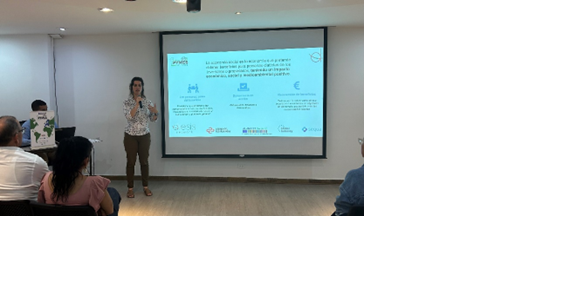
Anyella Patricia Fuentes Romero, Director of the Regionalization Area of the Bucaramanga Chamber of Commerce, outlined the project’s objectives and intermediate results, highlighting the importance of the green transition for productive enterprises. The initiative aims to qualify local production and raise awareness among small and medium-sized enterprises (SMEs) about the European framework for productive sustainability.
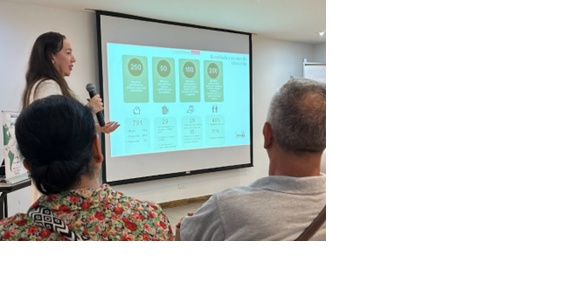
Enzo Faloci, representing SFC, presented the Internationalization Plan and the product and process certification system as tools to help entrepreneurs and production systems assess the opportunities and challenges of international trade, particularly towards Europe. The plan was tailored to the characteristics of Colombian production, with a view to expanding into European markets.
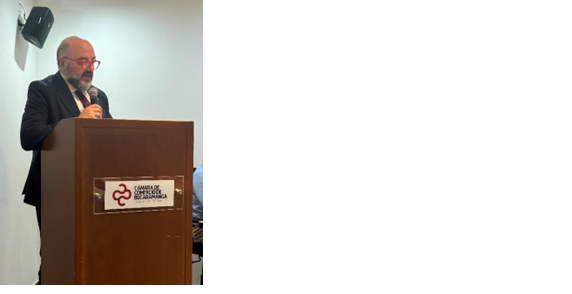
Giulia Georg, for Diesis Network, introduced the topic of Corporate Social Responsibility, explaining how this approach can further enhance Colombia's commercial offering by integrating it with environmental sustainability principles.
Challenges and Opportunities for SMEs
One of the main difficulties highlighted was organizing certification and quality processes for the products of small local producers. Drawing from the Italian experience, the concept of a Business Network was introduced, offering a distinct model from the agro-food consortia. This network would allow local businesses to face global market challenges more effectively.
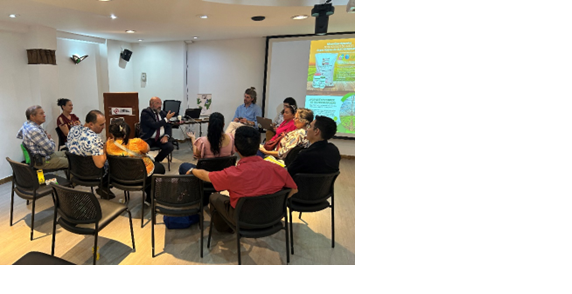
The day's program involved businesses in one-to-one and group meetings with the project team to explore the certification process for sustainability, providing support for the internationalization of Colombian SMEs.
Business Cases and Best Practices
During the meetings, several agro-food sector business cases were analyzed. Products such as natural cocoa, cocoa-derived honey, coffee, and fruit dried with innovative techniques showcased the distinctive strength of local production. Innovation in production processes and managing recycled product quality emerged as another key advantage.
A concrete example of collaboration between Latin America and Europe came from the wood processing sector for the production of industrial pallets. A local company, thanks to commercial collaboration with European partners, was able to highlight the sustainability of the wood used. Supported by the Bucaramanga Chamber of Commerce, the company succeeded in exporting not just raw materials but value-added products, finding an inter-institutional agreement that promotes sustainable synergy.
The day concluded with further meetings, deepening the certification process for sustainability and providing support to SMEs to face the international market.
The "GREEN PYMES ALLIANCE" project continues to build bridges between Colombia, Honduras, and Italy, uniting innovation and sustainability to create a greener future.
Today, SFC is in Bucaramanga, Colombia, as the European partner of the "GREEN PYMES ALLIANCE" project, in collaboration with the Chambers of Commerce of Colombia, Honduras, and Diesis Network.
The initiative is led by the Bucaramanga Chamber of Commerce and co-financed by the European AL INVEST GREEN program. The main objective is to promote sustainable growth and job creation in Colombia and Honduras by facilitating the transition towards low-carbon, resource-efficient, and circular economies. This process allows local businesses to more easily access international markets, with a particular focus on European ones.
During the meeting, the participating businesses showed strong interest in the support services offered by the project, agreeing to embark on an initial step of analyzing and evaluating the potential for certifying their products for sustainability, with the goal of beginning an internationalization process.
Project Presentations and Objectives
Anyella Patricia Fuentes Romero, Director of the Regionalization Area of the Bucaramanga Chamber of Commerce, outlined the project’s objectives and intermediate results, highlighting the importance of the green transition for productive enterprises. The initiative aims to qualify local production and raise awareness among small and medium-sized enterprises (SMEs) about the European framework for productive sustainability.
Enzo Faloci, representing SFC, presented the Internationalization Plan and the product and process certification system as tools to help entrepreneurs and production systems assess the opportunities and challenges of international trade, particularly towards Europe. The plan was tailored to the characteristics of Colombian production, with a view to expanding into European markets.
Giulia Georg, for Diesis Network, introduced the topic of Corporate Social Responsibility, explaining how this approach can further enhance Colombia's commercial offering by integrating it with environmental sustainability principles.
Challenges and Opportunities for SMEs
One of the main difficulties highlighted was organizing certification and quality processes for the products of small local producers. Drawing from the Italian experience, the concept of a Business Network was introduced, offering a distinct model from the agro-food consortia. This network would allow local businesses to face global market challenges more effectively.
The day's program involved businesses in one-to-one and group meetings with the project team to explore the certification process for sustainability, providing support for the internationalization of Colombian SMEs.
Business Cases and Best Practices
During the meetings, several agro-food sector business cases were analyzed. Products such as natural cocoa, cocoa-derived honey, coffee, and fruit dried with innovative techniques showcased the distinctive strength of local production. Innovation in production processes and managing recycled product quality emerged as another key advantage.
A concrete example of collaboration between Latin America and Europe came from the wood processing sector for the production of industrial pallets. A local company, thanks to commercial collaboration with European partners, was able to highlight the sustainability of the wood used. Supported by the Bucaramanga Chamber of Commerce, the company succeeded in exporting not just raw materials but value-added products, finding an inter-institutional agreement that promotes sustainable synergy.
The day concluded with further meetings, deepening the certification process for sustainability and providing support to SMEs to face the international market.
The "GREEN PYMES ALLIANCE" project continues to build bridges between Colombia, Honduras, and Italy, uniting innovation and sustainability to create a greener future.